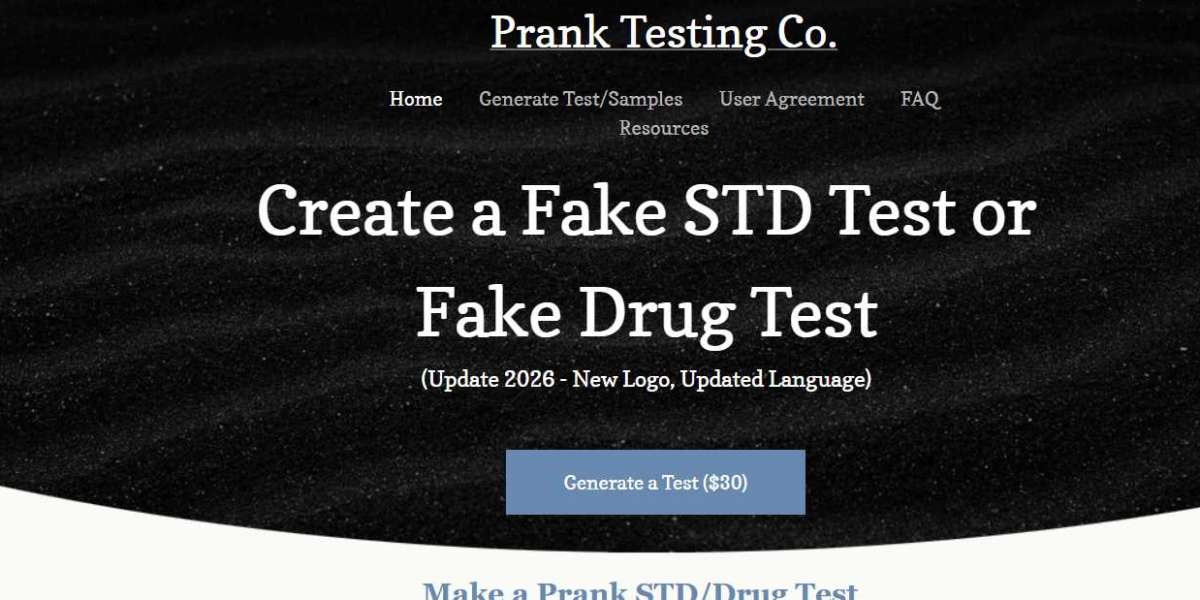

Test templates can sometimes be useful for educational, design, or administrative purposes, but they should never be confused with genuine medical results. STD and drug-test reports STD results templateinformation generated from real testing procedures, while a template is simply a visual or instructional framework. Understanding this difference is important when dealing with medical documentation.
A genuine STD test begins with a real patient sample. Depending on the infection being investigated, a healthcare professional may collect blood, urine, or another appropriate specimen. The sample is then processed using an appropriate laboratory method. The resulting information is interpreted according to the testing procedure and the patient's circumstances. A document reporting the result is therefore only the final representation of a larger testing process.
A template does not contain that scientific process. It may show where general information would appear, such as a patient identifier, test name, date, or result category, but it does not demonstrate that a person was actually tested. For this reason, templates can be appropriate for training or design demonstrations when they are clearly labeled as fictional or educational.
Drug-test documentation works similarly. A legitimate drug test depends on the collection and analysis of a biological sample. Depending on the program, the process may involve identification checks, sample handling procedures, laboratory analysis, verification, and professional review. A document created without that underlying process cannot legitimately represent the result of a drug test.
This distinction becomes particularly important when people encounter documents online described as fake test examples. Some may be intended only as visual demonstrations, while others may be marketed for deceptive purposes. Anyone using an example document for educational or design purposes should make its fictional status unmistakable.
Medical documentation also contains sensitive information. Real laboratory reports can include personal identifiers and health-related details. Sharing genuine reports publicly can therefore create privacy risks. When an example is needed for training, presentations, software development, or document design, fictional information should be used instead of real patient data.
Organizations that receive testing documentation should focus on verification rather than appearance. A professional-looking document is not automatically evidence of legitimate testing. If authenticity matters, the appropriate healthcare provider or laboratory should be contacted through independently verified channels and the organization's established procedures should be followed.
Individuals can also protect themselves by requesting copies of their genuine results directly from their healthcare provider or testing service. If a result is lost, many providers can explain how to obtain another official copy.
The key difference is therefore simple: a template represents what a document might look like, while a genuine medical report represents the outcome of an actual testing process. Educational examples can be useful when clearly labeled, but they should never be presented as authentic medical evidence.
Using genuine testing and clearly identified educational materials helps protect health, privacy, professional credibility, and trust. When documentation is required, the safest approach is always to rely on the legitimate testing provider rather than fabricated results.